
Saturday, March 17, 2012
Friday, March 9, 2012
March is Nutrition Month, Call It Cooking Month
But the chances are you already know what to eat. In fact, in a recent study, 85% of Americans were aware of functional foods (those that pack a health punch beyond their nutritional value), but less than 50% of us are actually eating them.
Read more: http://latino.foxnews.com/latino/health/2012/03/09/manuel-villacorta-nutrition-month-call-it-cooking-month/#ixzz1odT9MN6N
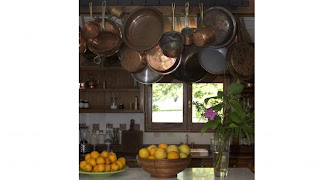
As a nation, we have demanded quick, easy meals, and insisted it's all we have time for. In my practice, all I hear is that people are too busy and too stressed to cook. But is time really the problem? In a previous generation, we learned to cook from our parents, especially our mothers. I myself am of the first generation that was raised largely with the packaged foods that became available in the 1960s and 1970s. And I can see the influence of this food in people of my generation—I go to their homes and no one is using the stove. Often, they don't really even know how to. They've turned to prepared, processed foods out of necessity, not just time constraints.
Sweet and Savory Slow Cooked Cuban Picadillo
And let's just be clear—opening a package is not cooking. In 2011, a recent study found, 72% of meals were prepared at home. This was an unexpected piece of good news out of a bad economy. But it's mixed good news, because a lot of that "preparation" wasn't really cooking; it was plating up processed foods.
The fact is, it's not just about eating at home—it's about buying whole
Read more: http://latino.foxnews.com/latino/health/2012/03/09/manuel-villacorta-nutrition-month-call-it-cooking-month/#ixzz1odTYlgIN
By Manuel Villacorta
Read more: http://latino.foxnews.com/latino/health/2012/03/09/manuel-villacorta-nutrition-month-call-it-cooking-month/#ixzz1odT9MN6N

As a nation, we have demanded quick, easy meals, and insisted it's all we have time for. In my practice, all I hear is that people are too busy and too stressed to cook. But is time really the problem? In a previous generation, we learned to cook from our parents, especially our mothers. I myself am of the first generation that was raised largely with the packaged foods that became available in the 1960s and 1970s. And I can see the influence of this food in people of my generation—I go to their homes and no one is using the stove. Often, they don't really even know how to. They've turned to prepared, processed foods out of necessity, not just time constraints.
Sweet and Savory Slow Cooked Cuban Picadillo
And let's just be clear—opening a package is not cooking. In 2011, a recent study found, 72% of meals were prepared at home. This was an unexpected piece of good news out of a bad economy. But it's mixed good news, because a lot of that "preparation" wasn't really cooking; it was plating up processed foods.
The fact is, it's not just about eating at home—it's about buying whole
Read more: http://latino.foxnews.com/latino/health/2012/03/09/manuel-villacorta-nutrition-month-call-it-cooking-month/#ixzz1odTYlgIN
By Manuel Villacorta

Tuesday, February 28, 2012
Burn Maximum Fat in Just 4 Minutes - Tabata Training 101
Does the Popular Interval Training Technique Deliver?
Said to deliver big results such as improved aerobic endurance, anaerobic endurance, muscular endurance and fat burning, Tabata training is all the rage these days. But what is Tabata training, exactly? Maybe more importantly, does it live up to the hype and... Read More
If you're trying to lose weight, Tabata may seem like a quick way to boost metabolism and burn fat. And while it can be, remember that true weight loss comes down to taking in fewer calories than you burn. Because Tabata workouts are so short, they simply... Read More
Article Link: Tabata Training 101
By Jennipher Walters
Tuesday, February 21, 2012
The Secret to Loving Your Body Isn't Losing Weight
 I always used to think that if I was skinnier, I'd be happier—not just with my body but with my life in general. Many of us believe that weight loss is the answer to many of our problems and pitfalls. We think that when we lose weight we'll not just feel more confident, but we'll land a mate, improve our marriages, be more successful, have more friends, or just feel happier in general. For a lot of people weight loss—or, rather, being thin—is the golden ticket we've been waiting on.
But many people who have lost any significant amount of weight will probably be quick to tell you that even as a thinner person, life doesn't change that much. You may have lost weight—and that's great for a lot of reasons—but you are likely the same person with the same outlook, same personality, same level of overall happiness. Weight loss alone won't cure you of your body hatred, your lack of confidence, your shy personality or your low self-esteem.
I battled body hatred for many years. It compelled me to diet and exercise until I lost too much weight. I liked the attention I received, but... Read More
Article Link: The Secret to Loving Your Body Isn't Losing Weight
By Nicole Nichols
Friday, February 10, 2012
San Diego is...
Let's recap the first ten days of February here in San Diego. In one word, INCREDBILE !
These pictures were taken from the mighty cell. Forgive the quality.


Monday, February 6, 2012
Be One in a Million this American Heart Month
Cardiovascular disease is the leading cause of death in the United States; one in every three deaths is from heart disease and stroke, equal to 2,200 deaths per day.

"Heart disease takes the lives of far too many people in this country, depriving their families and communities of someone they love and care for—a father, a mother, a wife, a friend, a neighbor, a spouse. With more than 2 million heart attacks and strokes a year, and 800,000 deaths, just about all of us have been touched by someone who has had heart disease, heart attack, or a stroke."
- Department of Health and Human Services Secretary Kathleen Sebelius
February is American Heart Month, and unfortunately, most of us know someone who has had heart disease or stroke. Cardiovascular disease is the leading cause of death in the United States; one in every three deaths is from heart disease and stroke, equal to 2,200 deaths per day. These conditions are also leading causes of disability preventing people from working and enjoying family activities. Cardiovascular disease is also very expensive—together heart disease and stroke hospitalizations in 2010 cost the nation more than $444 billion in health care expenses and... Read More
Article Link: Be One in a Million this American Heart Month

"Heart disease takes the lives of far too many people in this country, depriving their families and communities of someone they love and care for—a father, a mother, a wife, a friend, a neighbor, a spouse. With more than 2 million heart attacks and strokes a year, and 800,000 deaths, just about all of us have been touched by someone who has had heart disease, heart attack, or a stroke."
- Department of Health and Human Services Secretary Kathleen Sebelius
February is American Heart Month, and unfortunately, most of us know someone who has had heart disease or stroke. Cardiovascular disease is the leading cause of death in the United States; one in every three deaths is from heart disease and stroke, equal to 2,200 deaths per day. These conditions are also leading causes of disability preventing people from working and enjoying family activities. Cardiovascular disease is also very expensive—together heart disease and stroke hospitalizations in 2010 cost the nation more than $444 billion in health care expenses and... Read More
Article Link: Be One in a Million this American Heart Month
Tuesday, January 24, 2012


Burn Calories Playing in the Snow
| Activity | Calories Burned |
|---|---|
| Building a Snowman | 285 calories burned per hour |
| Having a Snowball Fight | 319 calories burned per hour |
| Making Snow Angels | 214 calories burned per hour |
| Winter Sport | 120-lb woman | 150-lb woman |
| Skiing | 273 | 340 |
| Snowboarding | 273 | 340 |
| Snowshoeing | 382 | 476 |
| Cross-Country Skiing | 436 | 476 |
| Ice Skating | 327 | 408 |
| Ice Hockey | 436 | 544 |
| Winter Hiking | 327 | 408 |
| Shoveling Snow | 273 | 340 |
| Sledding | 327 | 408 |
So skip the gym this weekend, instead grab your honey, best friend or grandmother and play in the snow.
Source: Unknown
Friday, January 6, 2012
Are You a Smart Snacker? QUIZ
 Are You a Smart Snacker? Take This Quiz to Find Out
 Snacking is a smart way to keep hunger at bay throughout the day, but the key is snacking on the right things, at the right times, and in the right places. Are your snacking habits healthy--or horrific? Find out how your snacks stack up with this short quiz.
Link: TAKE QUIZ NOW!!
By SPARKPEOPLE
Thursday, January 5, 2012
PARENTING - Advice from a former obese kid
 |
| “I know that recognizing the joy of the outdoors at that early age was probably the biggest reason that my major fitness overhaul wasn’t something I have had to start from scratch since,” says Max Greenberg. (James Brosher-AP) |
As a kid, I took solace in food and led a mostly sedentary life. This landed me well north of 200 pounds sometime after middle school. Year after year, my parents plied me with rewards, begged, occasionally threatened — to no avail.
It eventually took many hours of focused exercise (and countless uneaten cupcakes) to shed that dangerous weight. But a much subtler change in behavior ensured that, while I might periodically struggle in years to come, I wouldn’t get myself...
Unstructured outdoor play is an important complement to more focused exercise, building habits where youth soccer practice — which usually ends when one’s youth soccer career ends — might not. A study published in the September edition of the American Journal of Preventive Medicine showed adult supervision may actually lower the likelihood of physical activity (adult safety concerns tend to put a damper on kids and inhibit freedom) and that, for the youngest children, more organized play may mean less total activity. Read MoreArticle Link: Advice from a former obese kid
By Janice D'Arcy
Monday, January 2, 2012
12 Ways to Grow Younger in 2012
Wouldn't it be nice to feel younger as you get older? You can, and it isn't the stuff of "The Curious Case of Benjamin Button." From taking vitamin D to watching your blood pressure and managing stress, these 12 anti-aging strategies will help you live younger in 2012.
1. Take vitamin D. YOU Docs Mehmet C. Oz, M.D., and Michael F. Roizen, M.D., call vitamin D "the ultimate anti-ager." That's because it nourishes your memory, skin, heart, bones, and arteries, and it helps fight off cancer. Getting enough vitamin D daily (1,000 mg; 1,200 mg after age 60) can make your body think it's 9.4 years younger.
Here's the best time of day to take your vitamin D.
2. Care for your teeth and gums. A healthy smile looks lovely -- and helps keep your arteries and immune system in top shape. Flossing and brushing daily can prevent periodontal disease and tooth loss, which can make you feel 6.1 years younger.
3. Watch your numbers. Keeping your waist size, blood pressure, blood sugar, and cholesterol in the healthy zone dramatically reduces your risk of many problems, including cardiovascular disease. The combined effect can make your body think it's as much as 19.8 years younger.
4. Keep stress in check.Stress comes in many shapes, sizes, and strengths. Some stress is good, but the bad kind ages you inside and out. Reducing bad stress with meditation or other meditation techniques can help you feel 1.7 years younger.
Use these 12 steps to conquer stress.
5. Stay in touch. Reach out to family and friends through e-mails, phone calls, and, whenever you can, face-to-face visits. Staying connected can make you feel 8.5 years younger.
6. Pump some iron. Working out with weights does your muscles and... Read More
Article Link: 12 Ways to Grow Younger in 2012
By The Editors at RealAge | Healthy Living
 |
Want to grow younger in 2012? Pump iron a few times a week.
|
1. Take vitamin D. YOU Docs Mehmet C. Oz, M.D., and Michael F. Roizen, M.D., call vitamin D "the ultimate anti-ager." That's because it nourishes your memory, skin, heart, bones, and arteries, and it helps fight off cancer. Getting enough vitamin D daily (1,000 mg; 1,200 mg after age 60) can make your body think it's 9.4 years younger.
Here's the best time of day to take your vitamin D.
2. Care for your teeth and gums. A healthy smile looks lovely -- and helps keep your arteries and immune system in top shape. Flossing and brushing daily can prevent periodontal disease and tooth loss, which can make you feel 6.1 years younger.
3. Watch your numbers. Keeping your waist size, blood pressure, blood sugar, and cholesterol in the healthy zone dramatically reduces your risk of many problems, including cardiovascular disease. The combined effect can make your body think it's as much as 19.8 years younger.
4. Keep stress in check.Stress comes in many shapes, sizes, and strengths. Some stress is good, but the bad kind ages you inside and out. Reducing bad stress with meditation or other meditation techniques can help you feel 1.7 years younger.
Use these 12 steps to conquer stress.
5. Stay in touch. Reach out to family and friends through e-mails, phone calls, and, whenever you can, face-to-face visits. Staying connected can make you feel 8.5 years younger.
6. Pump some iron. Working out with weights does your muscles and... Read More
Article Link: 12 Ways to Grow Younger in 2012
By The Editors at RealAge | Healthy Living
Saturday, December 31, 2011
Stop Dieting and Start Living
Have You Made the Change?
You’ve heard it so many times that you probably say it in your sleep. "Diets don’t work; if you want to lose weight and keep it off, you have to make a lifestyle change."

Here are the main ways a diet differs from a lifestyle:
- A diet is all about numbers—the number on the scale and the number of calories you eat and burn. Success is defined in terms of how well you stick to your numbers.
A lifestyle change is all about you. It’s about lining up your eating and physical activity with your real goals and desires. Success is defined in terms of how these changes make you feel about yourself. - The diet mentality assumes that reaching a certain weight is the key to finding happiness and solving other problems. That’s why messing up the numbers on any given day can be so upsetting—it means you’ve messed up on just about everything that really matters.
The lifestyle approach assumes that being overweight is usually the result of other problems, not the cause. Addressing these problems directly is the best way to solve both the problems themselves and your weight issues. This means focusing on many things, not just the numbers on the scale or the Nutrition Tracker. Numbers only tell a small part of the story, and “bad” numbers often provide good clues into areas that need attention.
- Going on a diet involves an external and temporary change in eating technique. You start counting and measuring, and you stop eating some foods and substitute others, based on the rules of whatever diet plan you are using. Maybe you throw in some exercise to burn a few extra calories. You assume that it’s the technique that produces the results, not you. The results of a diet are external; if you’re lucky, you may change on the outside—but not on the inside. Once you reach your goal weight, you don’t need the technique anymore, and things gradually go back to “normal.” So does your weight—and then some. And, of course, all the problems you hoped the weight loss would solve are still there.
Making a lifestyle change involves an internal and permanent change in your relationship with food, eating, and physical activity. You recognize that the primary problem isn’t what you eat, or even how much you eat, but how and why you eat. Eating mindlessly and impulsively (without intention or awareness) and/or using food to manage your emotions and distract yourself from unpleasant thoughts—this is what really needs to change. Learning to take good care of yourself emotionally, physically, and spiritually—so that you don’t want to use eating to solve problems it really can’t—is a lifelong learning process that is constantly changing as your needs and circumstances change.
- By Dean Anderson, Behavioral Psychology Expert
Saturday, December 24, 2011
Christmas Eve Cowles Mountain San Diego
... more on lifestyle, climate and prime time real estate!
 |
| Cell phone photos taken by Mike Ginn |
 |
| Perfect weather! |
 |
| Coronado Islands & Lake Murray |
 |
| Trail head, Cowles Mtn in the distance |
Wednesday, December 21, 2011
San Diego Mayor Jerry Sanders Loses 94 Pounds - Men's Fitness
San Diego residents looking for inspiration to lose weight don't need to look any further than their mayor, Jerry Sanders.
JERRY SANDERS
Hometown: San Diego, California
Age: 61
Height: 5'10"
Weight Before: 276 lbs.
Weight After: 182 lbs.
Hometown: San Diego, California
Age: 61
Height: 5'10"
Weight Before: 276 lbs.
Weight After: 182 lbs.

With all the lifestyle changes, the pounds didn't really start to come off until his trainer, whom he works with twice a week, started making him take accountability for his progress. "He thought I was working out hard, but I wasn't losing weight fast enough, so he started weighing me every Friday and that's what turned the table."
Beyond the health benefits (his blood pressure and cholesterol dropped with his pants size), he gets constant motivation from how much he loves walking (his rep tells us his music of choice during these epic walks is Pink Floyd) and the response he's gotten from everyone around him. "It's been kind of amazing. People are really focused ... Read More
By Elizabeth Yun
By Elizabeth Yun
Mark Bittman on what's wrong with what we eat
"In New York, an orange was a common Christmas present because it came ALL the way from Florida."
"How we got to this place, is the history of food in the United States. And I'm going to go through that, at least the last one hundred years or so, very quickly right now."
"Margarine didn't exist. In fact, when margarine was invented, several states passed laws declaring that it had to be dyed pink, so we'd all know it was a fake. There was no snack food, and until the 20's, until Clarence Birdseye came along, there was no frozen food."
"How we got to this place, is the history of food in the United States. And I'm going to go through that, at least the last one hundred years or so, very quickly right now."
"Margarine didn't exist. In fact, when margarine was invented, several states passed laws declaring that it had to be dyed pink, so we'd all know it was a fake. There was no snack food, and until the 20's, until Clarence Birdseye came along, there was no frozen food."
Monday, December 12, 2011
20 Unusual Uses for Coffee
Can you imagine life without coffee? We'd all stumble around like drones for hours every morning, lost without our precious fix. We love coffee for its flavor, its aroma and of course its pick-me-up, but there are at least 20 more compelling reasons to stay stocked up. These tips will give you surprising and unusual uses for fresh coffee beans or grounds that have gone stale, the pounds of used grounds you toss out every week and the dregs at the bottom of your cup.
 Kill fridge odor Wouldn't you rather smell coffee than two-week-old leftovers, half-rotten produce and spoiled milk? If your fridge is a nightmare of foul odors, place a bowl of fresh, unused coffee grounds inside and leave it for a day or two. The coffee will absorb the odors and you'll crave a cup whenever... read more
Reduce cellulite Pricey cellulite creams almost always have one major ingredient in common: caffeine, which supposedly enhances fat metabolism, reducing the appearance of these fatty pockets under... read more
Erase smells on your hands Garlic, salmon, cilantro - there are some things that smell delicious when cooking, but aren't so pleasant hours later when they linger on your hands. Get rid of them by rubbing a handful of used coffee grounds on your... read more
Make rich compost There's a reason so many gardeners swear by adding used coffee grounds to compost. The grounds are rich in phosphorous, potassium, magnesium and copper, they release nitrogen into the soil... read more
Get shiny hair Who doesn't want shiny, healthy-looking hair? Coffee is often recommended as a simple, natural treatment to make hair extra-glossy. Brew up an extra-strong pot, ... read more
Article Link: 20 Unusual Uses for Coffee
By Stephanie Rogers

Reduce cellulite Pricey cellulite creams almost always have one major ingredient in common: caffeine, which supposedly enhances fat metabolism, reducing the appearance of these fatty pockets under... read more
Erase smells on your hands Garlic, salmon, cilantro - there are some things that smell delicious when cooking, but aren't so pleasant hours later when they linger on your hands. Get rid of them by rubbing a handful of used coffee grounds on your... read more
Make rich compost There's a reason so many gardeners swear by adding used coffee grounds to compost. The grounds are rich in phosphorous, potassium, magnesium and copper, they release nitrogen into the soil... read more
Get shiny hair Who doesn't want shiny, healthy-looking hair? Coffee is often recommended as a simple, natural treatment to make hair extra-glossy. Brew up an extra-strong pot, ... read more
Article Link: 20 Unusual Uses for Coffee
By Stephanie Rogers
Subscribe to:
Posts (Atom)